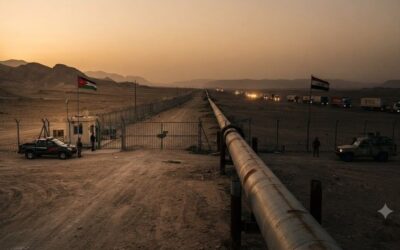

Anyone analyzing the current scene clearly understands that the escalation in the Middle East is no longer merely a series of reciprocal reactions between conflicting parties; rather, it has become part of a broader strategy aimed at redrawing the balances of power regionally and globally. What is taking place in Yemen, the Red Sea, and between Washington and Tehran cannot be read as isolated files, but as interconnected fronts operating under a single equation. Every advancement on one front directly impacts the others, as each party seeks to establish a new reality before reaching any political settlement.
What is happening in Yemen appears poised to change the rules of the game, as its war is no longer just an internal battleground. The Houthis’ announcement of expanding the arena of confrontation into the Red Sea—countered by the Yemeni government’s firm stance on sovereignty and the resumption of oil exports—reflects a shift from a local conflict to a confrontation affecting one of the world’s most critical strategic waterways. Bab al-Mandab is no longer merely a commercial transit point; it has transformed into a geopolitical bargaining chip, and any disruption within it will have repercussions extending far beyond the region to the global economy.
Furthermore, following recent U.S. statements reveals a clear shift in the rules of engagement. Washington is no longer speaking in terms of containing attacks, but rather holding Iran directly responsible for the actions of its proxies. This implies that any new attack may not just be met with a response against the local actor, but could extend to Iranian targets, thereby heightening the risk of sliding into a broader confrontation.
Iran, on its part, realizes that the conventional balance of power is not in its favor. Consequently, it relies on expanding the arenas of engagement and linking them together. Instead of fighting a direct war, Tehran aims to make any clash costly for everyone through a network of allies spanning from Yemen to Iraq and Lebanon. From this perspective, the Houthis’ moves do not appear isolated from Iranian calculations, but rather represent a core component of its regional deterrence strategy.
However, the paradox lies in the fact that while all parties are raising the threshold of their military rhetoric, none of them seem to want an all-out war. Yet, the most dangerous wars in history did not always begin with a deliberate political decision; they often stemmed from miscalculations, field incidents, or responses that crossed predefined boundaries. With the absence of a political track capable of containing the tension, the chances of error are higher than ever.
In my view, the region is not necessarily on the brink of an inevitable regional war, but it has entered a far more dangerous phase—a phase in which traditional deterrence rules are eroding, and the boundaries between local disputes and international conflicts are blurring. If the current pace of escalation continues, the next spark may not remain confined to Yemen or the Red Sea; it could evolve into a true test for the security of the entire Middle East, and perhaps become one of the most dangerous international crises in recent years.
Related Stories

So the Local Administration Reform Does Not Fail

Real Accountability Starts With the Government's Program