
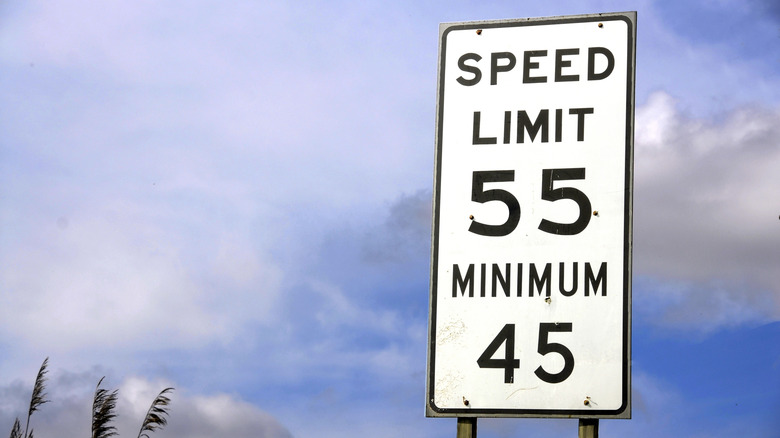
If You See A Minimum Speed Limit Sign, There’s A Good Reason Why
You know the importance of staying under the maximum speed limit while driving on your state’s highways, but what about staying above the minimum speed limit? These smaller numbers can be just as important as the bigger ones for keeping traffic moving safely and efficiently. Their purpose is simple: Speed limits are meant to keep you from driving too fast, but transportation agencies in some areas also see a need to keep you from driving too slow.
Fast-moving cars are the most obvious danger to other drivers, but slow-moving drivers can also be a danger in their own right. Driving too slowly disrupts the normal flow of traffic, which can be just as hazardous as speeding. With a minimum limit, the state transportation department can reduce unnecessary lane changes or passing maneuvers that put drivers in danger.
These minimum speed limits are the result of traffic studies in areas where slow-moving vehicles consistently disrupt the normal and reasonable flow of traffic. States aren’t shy about enforcing them, either, with states like Colorado cracking down on slow drivers who create bottlenecks in the left lane.
What happens if you go slower than the minimum speed limit
Essentially, the goal of a minimum speed limit is the same as a maximum speed limit: to maintain a predictable flow of traffic. Think about a vehicle going well below the max speed. They’re going to force surrounding drivers to brake unexpectedly, merge into other lanes, attempt risky passes, and generally increase the likelihood of crashes and congestion.
By enforcing a minimum speed limit, transportation agencies can make roads safer by keeping traffic moving more smoothly. Drive under the minimum speed in normal conditions, and you can get a ticket just the same as if you were speeding.
Of course, there are times when it’s appropriate to drive below the posted minimum speed. Bad weather (be it severe snow, heavy rain, or high winds), poor visibility, or hazards such as construction will likely require you to drive under that limit. Safety should take priority over maintaining normal highway speeds in these conditions.