
Fuel Economy Stickers Don’t Tell The Whole Story – AAA Data Reveals Why
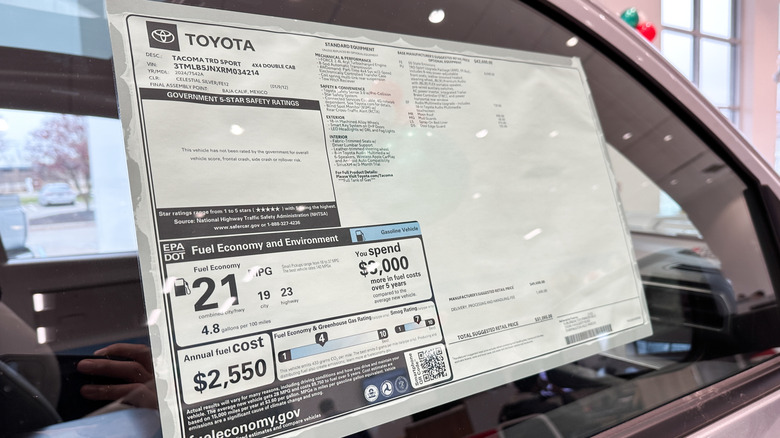
When shopping for a new vehicle in a car lot, many prospective buyers look closely for the window sticker. For them, the price is often the most important number and everything else is secondary. But the EPA fuel economy numbers are on that sticker as well, and they appear to be official figures. However, those numbers aren’t actually based on real-world conditions, which can make things a bit tricky.
In fact, according to AAA, 81.8% of drivers have reported achieving better fuel economy than EPA estimates. While that number may sound like a positive, 16% of drivers actually reported worse performance. These percentages were the result of AAA’s analysis of thousands of vehicles. The findings show a clear gap between the EPA’s standardized fuel economy estimates and actual driving outcomes measured across different conditions and driver behaviors.
In contrast, the EPA’s fuel economy figures come from lab testing that automakers are required to follow and submit each year. That testing consists of vehicle driving cycles in city and highway conditions, as well as high-speed and temperature-based driving. The results are then examined and combined to produce the official MPG numbers that appear on vehicle window stickers. Additionally, the majority of the results come from controlled testing conducted by the automakers themselves.
How real-world fuel economy can vary
Part of the problem with the EPA’s fuel economy testing is that outcomes can vary based not only where a vehicle is driven, but how. High-speed driving and aggressive driving are important factors, because they can both decrease fuel efficiency. The EPA does adjust for these kinds of conditions by including additional test cycles, but the results are still based on controlled laboratory testing. This means that even the same vehicles can produce very different results in the real world, depending on driving conditions.
But overall fuel economy can also vary based on vehicle type. This helps explain why some vehicle categories consistently differ from EPA estimates in real-world conditions. For example, AAA found that diesel vehicles, which are more efficient than gas vehicles, tend to get around 20% better gas mileage than EPA’s numbers. However, minivans are more likely to fall below their estimated fuel economy. In both cases, vehicle design and intended use can impact actual performance in the real world.
Plus, many people engage in more than just regular everyday driving. For example, drivers that spend more time in city environments with constant stops and lower speeds could potentially see a drop in overall fuel efficiency. This result can contradict the EPA’s findings, which assume a mix of both city and highway driving. This means that drivers spending more time on the highway can also see a difference in fuel efficiency results, as you get more MPG on the highway.