This Popular Rim Upgrade Has A Surprising Effect On Fuel Economy
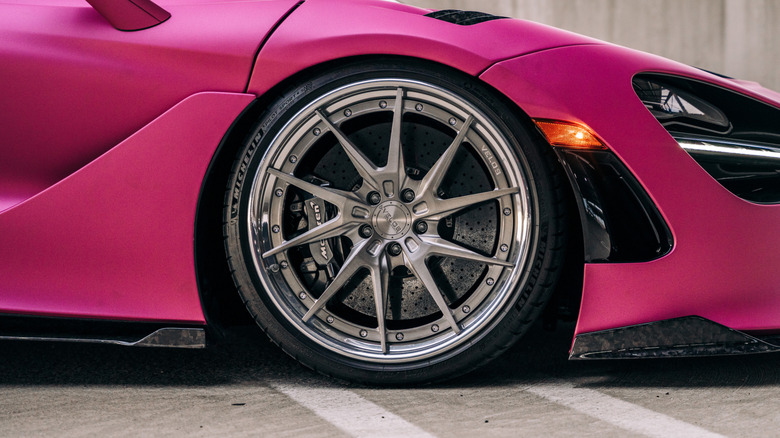
As fuel costs surge, it’s paramount to get the most mileage from every tank. This means finding ways to save money on gas when you fill up, ensuring that your vehicle is free of economy-sapping faults, and ditching mods and add-ons that suck up more fuel than they should. For example, those larger-than-necessary rims you’re running purely for aesthetic value are causing your daily driver to use more gas than it would otherwise.
This boils down to a principle called rolling resistance, which is the gravitational force that works against an object as it rolls along a surface. This friction is essential for tires to grip the roadway, but the extra size, width, and weight of many aftermarket rims can increase this beyond what is ideal. More weight pushes the tire into the ground harder, deforming it as it makes contact and increasing rolling resistance. A car will need more force to keep these tires moving at speed, causing the engine to work harder and use more fuel than a smaller rim. When it comes to fuel economy, less rolling resistance is always better. Thus, rocking large, heavy rims with bulky tires is no way to get the most from your full tank.
Keeping your rims and tires fuel-efficient
Using the right rims and tires is just the start, and there are other steps you can take to get as much mileage as possible from a tank of gas. As mentioned, increased tire deformation means more energy is needed to move along the road. To keep the deformation to a minimum, you should fill your tires to the manufacturer’s recommended pressure. This can usually be found on a sticker inside the driver’s side door jamb, although you may also find it inside the glove box, the fuel door, or the owner’s manual. Just make sure not to put too much air into your tires to avoid other tire issues. You should also rotate your tires regularly to ensure even wear, which can help reduce the load on the engine.
As for your rims, you can do more than keep them at the recommended size
You should also keep your rims clean and keep a close eye on them as they age. Rust and dirt can cause the tire bead and rim to separate, leading to small, slow air leaks. Air leaks reduce tire pressure, leading to increased deformation and uneven wear, which will harm fuel economy. Being a safe and careful driver goes a long way, too: All it takes is hitting one deep pothole at a bad angle or at high speed to damage one or both — and potentially harm fuel economy as well. So, as fun as it is to customize your ride, larger rims and tires aren’t the best mods to go for when fuel prices spike.