
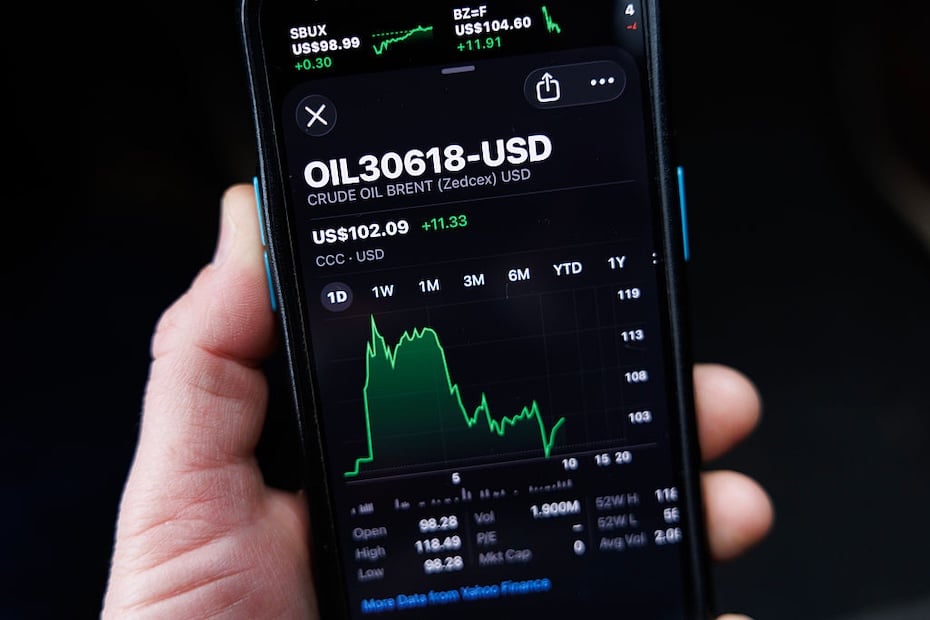
Front-month Brent futures contracts fell below $90 per barrel in mid-morning trading in London after US President Donald Trump said the conflict in the Middle East is “very complete.”
It marks a dramatic downturn after prices reached a four-year high of $119.50 per barrel during trading on March 9, as market participants suggest the “panic premium” has vanished.
The dramatic price moves since the Iran-US conflict have come from speculative and hedging flows rather than physical fundamentals.
While the Strait of Hormuz was effectively closed due to a lack of insurance options, oil prices were moved primarily by negative gamma and declining liquidity across petroleum futures as volatility increased.
An emergency meeting of G7 finance ministers yesterday is being followed by a meeting of energy ministers later today. A release of strategic petroleum reserves is anticipated, which could help alleviate supply shortages from reduced production in the Middle East.
Production cuts by Middle Eastern producers due to drone strikes and storage limits will take a minimum of weeks to return to previous levels.
In a further price-dampening move, the US administration said it will lift sanctions on oil transactions for “some countries.”
Market participants understand this to mean Russian oil, given that the US has already issued a 30-day waiver for India to resume purchases of Russian oil on March 6. Russian oil can avoid the Strait of Hormuz, and there is a large amount of Russian oil-on-water, making a relaxation of sanctions equivalent to a stock release, as it can quickly find buyers in key pricing centres.
Russian President Vladimir Putin said that Russia is increasing exports to “reliable partners.” This means buyers in Asia, as well as Slovakia and Hungary, which have continued to purchase Russian oil despite EU pressure to stop.
Discounts for Russian material versus dated Brent have been narrowing because of demand for non-Gulf oil and the relaxation of sanctions on Russia.
An Iran-linked vessel laden with 2 million barrels of crude oil crossed the Strait of Hormuz, heading toward China.
Two LPG vessels were also seen transiting the Strait from Iran to China, a sign that vessel traffic could continue. Most oil from the Gulf goes to Asia, while almost all Iranian oil goes to Chinese independent refiners.
Markets will look towards any evidence of shipping transiting the Strait of Hormuz, G7 stock releases, weekly US stock data, and the evolution of the conflict in order to determine where prices are headed in the next week.
Given mid-term elections in the US later this year, the administration will want to temper gasoline prices which play an outsized psychological role in US election given its visibility, particularly in a contest that will be defined by affordability concerns.
- Sasha Foss is an Energy Analyst for CSC Commodities, a division of Marex.