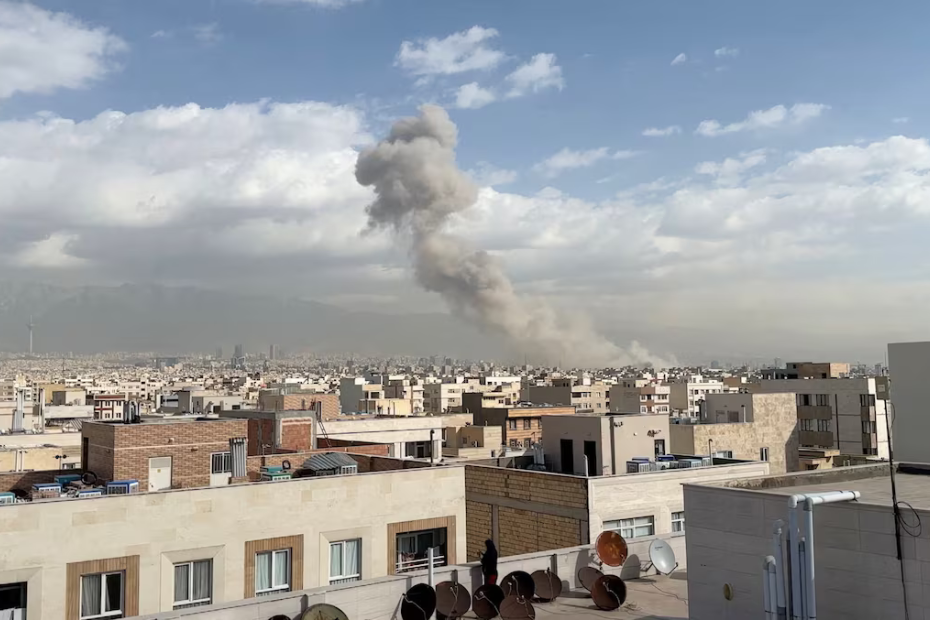
Surging oil prices and the escalating US-Israeli tensions with Iran hammered airline stocks in Asia on Monday, piling pressure on carriers already navigating tight airspace as travellers scramble to evade the Middle East conflict.
The tension has driven up fuel prices, with oil jumping 20 per cent in early trading on Monday, hitting its highest since July 2022, amid fears of tighter supply and prolonged disruptions to shipments.
Stranded passengers have been paying huge sums of money to escape the Middle East, with last-minute dashes to the airport, overland trips to less impacted hubs and fighter jets at times escorting passenger planes out.
Read more-<a href="https://gulfbusiness.com/us-dfc-intros-20b-maritime-reinsurance-backing-gulf-shipping/” target=”_blank” rel=”noopener”>US DFC unveils $20bn maritime reinsurance plan to support Gulf shipping
Since February 28, when the US-Israeli tensions with Iran started, through March 8, more than 37,000 flights to and from the Middle East were cancelled, according to data from Cirium.
Brendan Sobie, a Singapore-based independent aviation analyst, said the operating environment for airlines had been difficult even before the Middle Eastern crisis and the oil price spike due to political and economic uncertainty and supply chain issues.
“Now that already high level of uncertainty has increased even further,” he said.Shares in Australia’s Qantas Airways, Air New Zealand, Hong Kong’s Cathay Pacific, Japan Airlines, Korean Air Lines and major Chinese airlines China Southern and China Eastern all fell between 4 per cent and more than 10 per cent on Monday.
Shares of Indian carriers IndiGo and SpiceJet dropped 7
5 per cent and 5.6 per cent, respectively.
Fuel is the second-largest expense for air carriers after labour, typically accounting for a fifth to a quarter of operating expenses. Some major Asian and European airlines have oil hedging in place, but US airlines largely stopped the practice over the last two decades.
“If crude is rising 20 per cent, jet fuel is rising several times more as it is even more scarce, adding significant cost to operations together with crew resources which are stretched due to longer flying times when airspace is closed,” said Subhas Menon, head of the Association of Asia Pacific Airlines.
Hedging can protect airlines from spikes in fuel costs through the use of derivative contracts. But it can also backfire when prices fall, exposing carriers to above-market rates in swaps – a certain type of hedge contract that has burned some carriers in the past.
Travel disruptions persist as tensions escalates
With airspace severely constrained, airlines have been forced to reroute flights, carry extra fuel or make additional refuelling stops to guard against sudden diversions or longer flight paths through safer corridors.
Combined, Emirates, Qatar Airways and Etihad normally fly about one-third of passengers from Europe to Asia and more than half of all passengers from Europe to Australia, New Zealand and nearby Pacific Islands, according to Cirium data.
Flights to Iraq, Syria, Lebanon and Jordan by Turkish Airlines, AJet, Pegasus and SunExpress have been cancelled until March 13, Turkish Transport Minister Abdulkadir Uraloglu said on Sunday.
Air India has added dozens of flights to destinations in Europe and North America through March 18 as the closure of Middle Eastern airspace lifts demand for non-stop services.