
<small>We may receive a commission on purchases made from links.
Whether you’re interested in or have already acquired one of the best off-road vehicles with the intention of taking it off-road, or you find yourself at the end of the pavement in whatever vehicle you have, there are some common mistakes you’ll want to avoid before embarking on your off-road adventure. Having spent years as a member of a local off-roading club, I’ve witnessed and made several mistakes with consequences ranging from vehicle rollovers to lighthearted ridicule that persisted until the next person in the group messed up.
In the broadest sense, most mistakes made while off-roading are rooted in the details. Most of us get into our vehicles every day, start them up without so much as a pre-trip walkaround to make sure none of the tires are flat, and drive like we’re late to a NASCAR driver interview without a second thought.
It’s easy, for beginners and experienced off-roaders alike, to carry that same comfort level to our off-road rigs. For the best results, it’s a good idea to take a hard look at your goals and abilities for off-roading from the beginning.
Expecting too much from your vehicle
One primary consideration is the vehicle you plan to take off-road. Sure, you can take Subaru’s more expensive 2026 Outback off-roading, just like you could take a rock crawler to the grocery store; you just have to temper your expectations with your limitations and adjust accordingly.
Light-duty off-road vehicles with factory equipment are best suited for some desert two-tracks and maintained forest service roads. That limited capability may keep them away from the most hardcore off-road areas, but there are countless miles of these trails scattered across the United States that lead to some spectacular places.
To enjoy some of the more difficult trails, it’s best to drive a more purpose-built rig. Again, you should know your limitations and be willing to accept any damage that comes with tackling difficult obstacles.
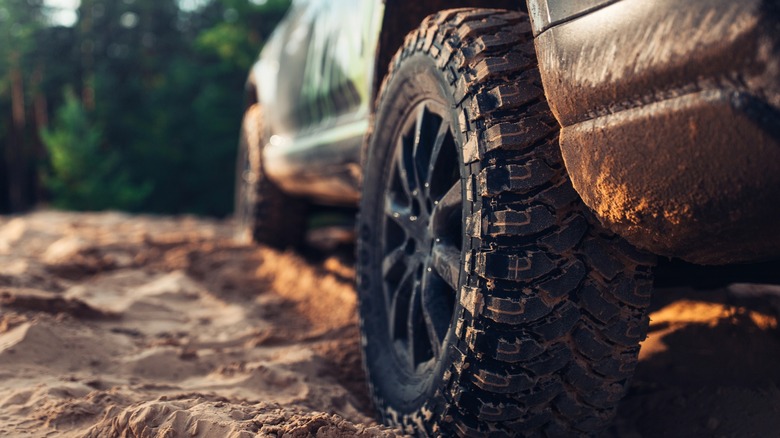
Many modern SUVs and light trucks are equipped with all-terrain or all-season tires, which offer a compromise between on- and off-road performance. While the factory tires are capable of carrying you into the wilderness on dry gravel roads, they might not get you back to civilization if wet weather turns that forest road into slop.
Having the wrong or improper gear
One of the first mistakes people make when going off-road is having the wrong or inadequate gear. We’re not talking about drivetrain gearing, not yet anyway, this is more about the stuff that you’ll depend on to keep you safe miles away from any paved roads.
In most cases, if you’re more than a few feet from a designated roadway, your roadside assistance provider won’t help you, and you’re on your own. Flat tires are common when off-roading, but we often see people without the proper means to change a tire trailside. The flimsy jack in your trunk, if your new vehicle even came with one, is dangerous if not completely useless away from a flat paved surface. For changing a flat tire trailside, it’s best to have an off-road hi-lift jack and know how to use it.
It’s also important to ensure your vehicle is equipped with sturdy recovery points. If you get stuck and need someone to pull you out with their vehicle, it’s unfair to place any blame on them for damages. Having a proper place to attach a tow strap or winch hook is key to getting unstuck safely. Traction boards, recovery straps, and on-board winches are also solid gear upgrades for any off-road adventure vehicle.
As a side note, it’s a good idea to carry a basic first aid kit, some drinking water, snacks, and an extra jacket (or even a change of clothes) in any vehicle used for anything other than local trips around town. These items are especially important when off-roading, as access to necessities is often more difficult due to distance or terrain.
Failure to plan ahead is another common mistake
Once our vehicle is outfitted with the proper gear for your off-road excursion, it’s time to make a plan. There are a few factors to keep in mind before setting out on our first off-road adventure, including: Where are we going? Who are we going with? When do we expect to return?
It’s not a good idea to venture into the wilderness off-roading alone. It’s easy to find areas that lack cell service, and taking your vehicle to its limits on off-road trails can lead to breakdowns or simply getting stuck. If you go alone, let someone know the particulars of your trip so they can send help if you can’t make it out on your own.
Planning doesn’t stop once you’ve left the pavement. If you’re in an off-road park, the trails are usually rated, and any hazardous areas are mapped out. In the backcountry, you’re on your own to decide if you and your rig are capable of tackling any particular obstacle. One of the biggest mistakes off-roaders make, especially those with less experience, is “going for it” without fully understanding what “it” is.
Sure, it’s exhilarating to blast through the water at a creek crossing or bounce up or down a steep grade. However, if the creek bed drops into a hole deeper than your rig or there’s a cliff at the top or bottom of the conquered grade, it could spell disaster. If you’re not sure of the trail ahead, it’s worthwhile to walk to a vantage point to see what you’re getting into.
Driver error
One of the best benefits of traveling off-road with at least one other person is having a spotter to give feedback when tackling tough obstacles. From the driver’s seat, it’s difficult to see rocks, washouts, tree stumps, and other obstacles along a trail. A big mistake drivers make while off-roading is either not having someone act as a spotter or, worse, ignoring their directions.
Driver error also comes from lapses in focus. Many people go off-roading for the scenery. Plus, the slow-moving nature of off-road trails and vehicles driving in 4-Low, or those equipped with Toyota’s “Trail Control” or something similar, makes it easy to take in the view even while driving. We once had a club member drive his rig off the side of a trail to the point where he required assistance getting out, all because a beautiful butterfly crossed his path.
Finally, pride leads off-road drivers into mistakes that could otherwise be avoided. Most off-road trails have bypass routes that skirt difficult obstacles. Some rigs take the easy way, others take the hard way: there isn’t any shame in knowing your limitations.
Not understanding the basics of off-roading
Another common mistake drivers make is not using their vehicle’s low range. Most 4WD trucks and SUVs have 4L, or 4-low, built into their transfer case. Shifting into 4-Low engages the vehicle’s four-wheel drive like 4-High does, except in a lower range. This allows the vehicle to move more slowly at higher engine rpm, where there’s more power and less chance of stalling.
Airing down when off-roading is another helpful practice that involves letting some of the air pressure out of your tires. Lower tire pressures allow the tires to create a larger contact patch with the ground and allow the tread and sidewalls to be more flexible. All of which increase traction and help to reduce the odds of tire punctures. How much air pressure you leave in your tires depends on the particular tire, its mounting method, and the terrain you’re likely to encounter, but a pressure that’s 10 to 20 psi under normal inflation is often recommended.
Trail etiquette is another area where people make mistakes off-road. Some concepts are simple, like don’t litter and stay on designated roads and trails. Others are more nuanced: yield to uphill and all non-motorized traffic. Yes, pedestrians have the right of way, but so do bicycles and horseback riders. It’s also much appreciated by others to drive sensibly: no speeding or reckless behavior, especially around people, horses, or in dusty areas.